
Custom Double-Sided Pegboard Display Rack Project
A custom metal display rack manufacturing case study covering two-tone powder coating, KD structure design, 30 kg per side load capacity, and container loading optimization for a US retail brand.

Project Overview
Formost is a custom metal display rack manufacturer in China. In this project, our engineering team developed a custom double-sided pegboard display rack for a US retail brand, covering structure design, material selection, powder coating, KD packing, and container loading optimization.
| Project Type | Pegboard Store Shelf / Double-Sided Display Rack |
| Material | Q235 steel, Q195 mild steel tubing, cold-rolled steel, hot-rolled steel, PVC header card |
| Surface Finish | Two-tone powder coating — black base and white back panels |
| Structure | KD structure with modular upper and lower sections |
| Overall Size | 1391 × 566 × 610 mm |
| Loading Capacity | 30 kg per side |
| Service Scope | Engineering suggestion, sample development, packaging optimization, mass production |
Customer Requirement
The US retail brand required a custom double-sided metal display stand for in-store merchandising. The key requirements included:
- Display Type: Double-sided metal display stand
- Color Scheme: Two-tone powder coating — black base and white back panels
- Loading Capacity: Heavy-duty design supporting 30 kg per side
- Header: PVC header card required for branding and signage
- Cost Control: Design must be cost-effective and suitable for economical manufacturing
- Reference: Concept based on provided reference images
- Overall Size: 1391 × 566 × 610 mm
Engineering Challenge
For Formost’s engineering team, the main challenge was to balance retail appearance, structural strength, two-tone finishing, low-MOQ manufacturing flexibility, and shipping efficiency simultaneously.
Engineering Proposal
Structure Design
To facilitate the two-tone finish and ensure cost-efficiency, the display was designed as a modular two-part structure with upper and lower sections. Although masking tape can be used for multi-color coating, it is labor-intensive and cost-prohibitive for oversized displays. For this project, Formost selected a Knock-Down (KD) assembly as the more professional and economical solution.
- Optimized Panel Dimensions: Given the approximate 1:2 width-to-height ratio, the backboard is split into two segments. This reduces individual component size and adds structural edges that serve as stiffener flanges, allowing thinner sheet metal to be used without sacrificing strength.
- Tubing Reinforcement: 20 × 40 mm rectangular tubing is welded around the four sides of the sheet metal, supporting heavy-load durability, simplifying assembly through a plug-in design with only two screws, and improving coating efficiency.
- Panel Selection — Pegboard over Slatwall: Pegboard panels are flat and can be processed with in-house laser cutting and CNC punching. This eliminates mold costs, supports small to medium-sized orders, and remains low-MOQ friendly while maintaining a high-end metal appearance. Slatwall profiles typically require specialized sheet metal forming tools or molds, which can create significant tooling fees.
- Tubing Frame — Q195 mild steel: Provides a reliable strength-to-weight ratio for industrial display applications.
- External Visible Panels — Cold-Rolled Steel (CRS): Offers a smoother surface, which is important for high-quality powder coating and a professional retail appearance.
- Internal Structural Parts — Hot-Rolled Steel (HRS): Cost-effective and ductile, but with a rougher surface finish. Limited to non-visible structural elements to control cost without compromising the final appearance.
- Design Adjustment: Base height reduced from 12 inches to 9 inches
- Impact on Efficiency: This 3-inch adjustment increases container loading utilization by approximately 5%
- Customer Benefit: Optimizing dimensions for international shipping reduces per-unit freight cost and provides a more competitive landed price

Material Selection
Formost selected a combination of materials to balance structural integrity, surface finish quality, and cost-efficiency:
Surface Treatment
Formost uses powder coating as the primary surface treatment. Coating cost is driven by surface area, powder consumption, spraying time, the labour of loading and unloading parts, electricity, and facility overhead.
Surface Area Reduction Strategy: The double-sided pegboards are designed as a sealed closed structure. This reduces the total powder coating area by nearly 50%, lowering powder consumption and processing time while maintaining required functional and aesthetic standards.
Cost & Packing Optimization
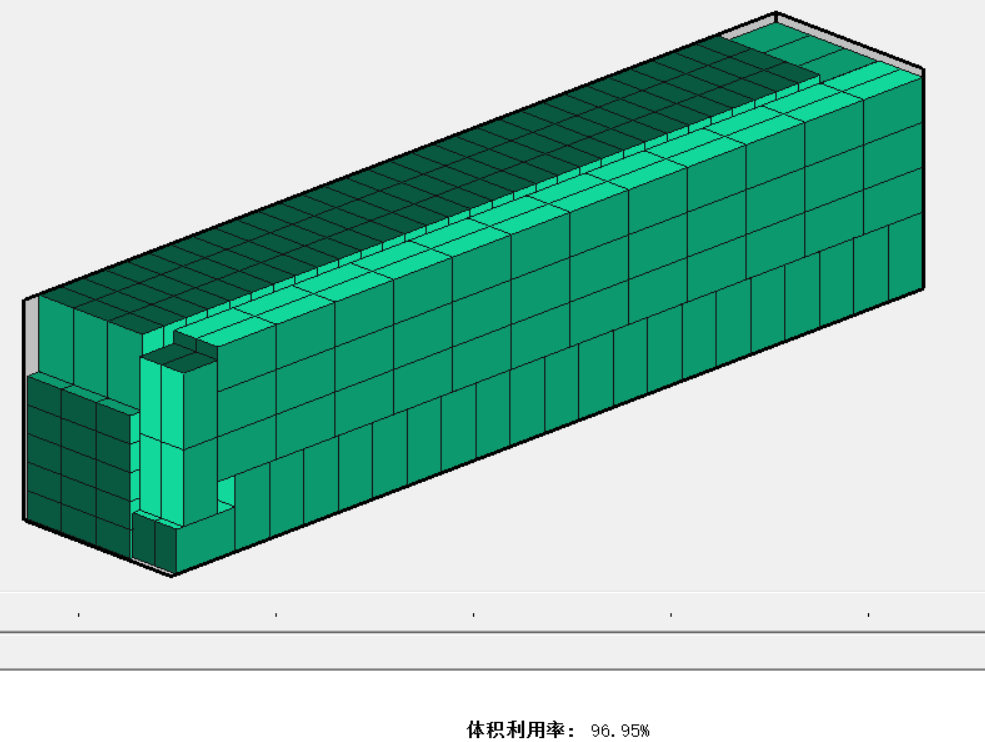
Through calculation and spatial analysis, the design was adjusted to improve logistics efficiency and reduce the landed cost per unit:
Why This Matters for Retail Buyers
For overseas buyers, the lowest unit price is not always the lowest total cost. In this project, Formost optimized the structure, material selection, powder coating process, and KD packing method together, reducing tooling cost, improving container loading efficiency, and keeping the display suitable for retail presentation. The result is a lower landed cost per unit without compromising the in-store appearance the brand needed.
Quotation & Confirmation
After confirming the structure, material, surface finish, quantity, and packing method, Formost prepared a quotation based on the agreed project specifications. A secondary engineering review was then conducted with a focus on logistics efficiency and component optimization:
- Mobility Adjustment: Casters were replaced with adjustable levelers, reducing hardware cost and improving overall stability when the display is fully loaded at 30 kg per side.
- Dimensional Optimization for Logistics: Ocean freight accounts for a significant portion of total landed cost. By reducing base height from 12 inches to 9 inches, container loading utilization increases by approximately 5% — improving overall value while reducing international shipping expense.
Rather than simply lowering the product price, improving container capacity is a more effective way to reduce landed cost per unit.
Sample Development
The sample was developed and approved against the project checkpoints — dimensional accuracy, assembly stability, two-tone powder coating quality, header card fitting, and packaging verification.
Packaging Test
The packaging was verified before mass production — carton size, component protection, KD packing sequence, loading efficiency, and transit-damage risk. Based on the test, paper corner protectors were added on all four corners to reinforce the display during international transportation.
Mass Production & Quality Control
With the approved sample, inspection standards, surface finish, loading capacity, and packing method confirmed with the customer, the display went into mass production and the order was completed.
Final Result
The project moved from approved sample to mass production, and the order was completed and shipped. The double-sided pegboard display was delivered as engineered: two-tone powder-coated upper and lower modules, plug-in assembly with two screws, and a 30 kg load per side. For export, the KD packing was reinforced with paper corner protectors on all four corners to protect the display in transit.
Related Factory Notes and Projects
- Pegboard vs slatwall for custom retail display fixtures – why pegboard panels were the practical choice here.
- KD vs fully welded display racks – how knock-down structure lowered shipping cost.
- Q195 vs Q235 steel selection – cold-rolled visible panels and hot-rolled structural parts.
- Surface finish comparison – choosing the two-tone powder coating.
- Custom four-sided beer island display rack project – another large floor display.
Have a Custom Project?
Formost can support similar custom metal display rack projects, including pegboard display racks, gridwall display racks, supermarket display racks, beverage display racks, and wire display racks, plus other OEM / ODM retail display fixtures. Buyers can send drawings, reference photos, dimensions, load requirements, target quantity, and packaging requirements for engineering review.
Contact UsFrequently Asked Questions
Why did Formost choose a knock-down (KD) structure for this double-sided pegboard display?
A KD modular design with separate upper and lower sections made two-tone powder coating practical without costly masking on an oversized display, simplified assembly to a plug-in design using only two screws, and supported efficient KD export packing for better container utilization and lower landed cost.
How is the two-tone black-and-white finish achieved cost-effectively?
Instead of labor-intensive masking on one oversized part, the display was split into modular sections that are powder-coated separately, so the black base and the white back panels are finished without high masking cost.
Why was pegboard chosen over slatwall for this display?
Pegboard panels are flat and can be processed in-house with laser cutting and CNC punching, which eliminates mold costs and stays low-MOQ friendly while keeping a high-end metal appearance. Slatwall profiles typically require specialized forming tools or molds that add significant tooling fees.
What load capacity and dimensions does the display support?
The double-sided display measures 1391 x 566 x 610 mm and is engineered to support 30 kg per side, using 20 x 40 mm rectangular tubing welded around the sheet-metal panels for heavy-load durability.
What materials are used, and why a combination?
Q195 mild-steel tubing for the frame, cold-rolled steel for the visible external panels (a smoother surface for high-quality powder coating), and hot-rolled steel for internal structural parts (cost-effective and ductile), plus a PVC header card for branding and signage.